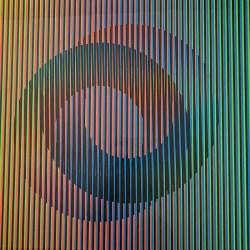

Born in 1928 in Besigheim, Germany. His artistic training was received in Germany and France. In 1955 he lived in Caracas.


Select your language


Born in 1928 in Besigheim, Germany. His artistic training was received in Germany and France. In 1955 he lived in Caracas.

Painter. He was born in Barcelona Spain on January 25, 1890. Critics have agreed to point Manuel Cabré as one of the great masters of the Venezuelan landscape.

Born in Caucagua (State of Miranda) on January 6 of 1928. He has been influenced by the cubism, by Klee and Tamayo; he used a technique of transparency which he combined with the calligraphy drawings.
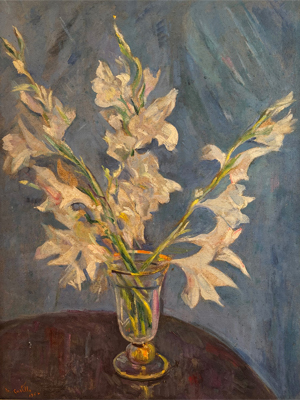
Castillo's artistic formation was shaped by a wide range of influences, including Federico Brandt, Manuel Cabré, Nicolás Ferdinandov, Samys Mützner, and Armando Reverón.

He studied at the School of Visual Arts and Applied Arts of Caracas and graduated from this center, participated in the activities of the Free Art Studio, founded in 1948.

Martín Tovar y Tovar born in Caracas the 10 of February of 1827. He died in the same city the 17 of December of 1902. Student of Carmelo Fernandez, in 1850 started off for Spain where he studied with Jose and Federico Madrazo.

Mateo Manaure is an artist of firm and consistent passion for painting. His long career, his abstraction and lyrical recollection to always discover new and surprising findings in plastic expression, qualify him as one of the great Venezuelan creators.

Son of an Italian father and Indian mother. At age 15 he moved to Valencia where he meets Braulio Salazar, who guides you through the early years of his artistic activity and encouraged to formalize their art studios.

She started a trajectory in the plastic arts from a very young age that included different techniques and diverse possibilities of abstract language, mainly in painting, watercolor, stained glass and collages, as well as her famous sets for theater and an abundant graphic work.

He studied at the School of Visual Arts and Applied Arts of Caracas, and later participated in the Free Art Workshop. He lived in Europe, mainly in France, between 1950 and 1955. He was part of the Disidentes group.
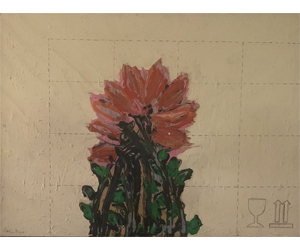
Frías' work resists easy categorization, existing in a space between abstraction and figuration. A 1987 critique described his paintings as "works of signs, of force, of gestures, of expressive synthesis, of memories".

Born in Caracas in 1960. He has had solo exhibitions in galleries Minotaur, Key and San Francisco in Venezuela. In Paris his work has been exhibited at the Cultural Center Tanagra, in the Cité Internationale des Arts exhibition in the galleries Arver De Mars and Space.
When starting a collection one must consider a variety of factors. First however, one must start by asking – why and how will I start to collect art?