

Select your language


Onofre Frías was born in 1953 in Tacarigua de Mamporal, in the Barlovento region of Miranda State, Venezuela. He pursued formal artistic training across several institutions in Caracas: the art workshop of Conac (1975–1980), painting, sculpture, and graphic arts at the Escuela Cristóbal Rojas (1976–1982), and graphic arts courses at Cegra (1983–1985). His talent was recognized early, earning him the second prize at the Salón Nacional de Pintura del IUPC in 1981 and the third prize for engraving at the Salón Universitario del ME in 1983.
Frías's work resists easy categorization, existing in a space between abstraction and figuration. A 1987 critique described his paintings as "work of signs, of force, of gestures, of expressive synthesis, of memories," specifying that these are "not descriptive or narrative memories, but perceptual memories". Throughout the late 1980s and 1990s, he presented a series of notable solo exhibitions in Caracas, including Pasos (1987), Concierto De Pintura, Miniaturas, and Macronatura (all 1988), as well as Claro Y Oscuro (1990) and En Contra Del Viento, Barlovento (1991).
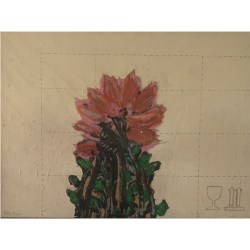
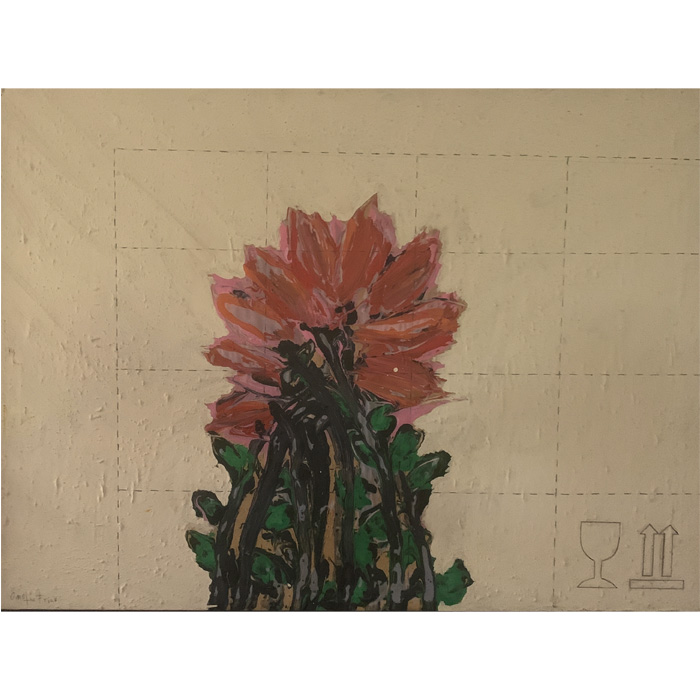
His mature artistic language is rooted in a deep investigation of Caribbean identity. Frías has developed a concept he calls Música Visual (Visual Music), which seeks to express the rhythms, flavors, and scents of Caribbean culture by fusing popular culture, tropical flora, and music into a visual language that dialogues with contemporary art. This line of research crystallized in his current body of work, Trópico Puro (Pure Tropics), where he combines three principal elements: flora (heliconia, bromeliads, cayenas, and birds of paradise), Caribbean musical rhythms (lambada, calypso, samba, salsa, and drum), and the use of pure, strongly contrasting colors.
Frías's contributions to Venezuelan art were formally recognized with the National Drawing Prize in 1990. His work has been exhibited internationally in countries including Germany, Spain, France, Italy, Belgium, the United States, Mexico, Cuba, Colombia, and South Korea, among others. He has also maintained an active teaching practice at institutions such as the Museo de Arte Contemporáneo Sofía Imber, the Museo de Bellas Artes in Caracas, and the Escuela de Artes Plásticas Cristóbal Rojas. In 2023 he continued to develop his Trópico Puro project and to lead free creativity workshops for children and young people, consolidating his legacy as one of the recognized figures of contemporary Venezuelan plastic arts.
We have access to a wide range of art collections to meet your requirements, ranging from Venezuelan & Latin American to international masters.
Contact us at +1 305 907-9960 regarding the artist you’re looking for; we’ll search and find it for you.
When starting a collection one must consider a variety of factors. First however, one must start by asking – why and how will I start to collect art?