

Select your language


Abdón Pinto was born in Valencia, Carabobo state, Venezuela, in 1891, the son of Adela Pinto. He came from a humble background and worked in various trades from childhood, but he demonstrated an early aptitude for drawing. At the age of twenty, in 1911, he moved to Caracas and enrolled at the Academy of Fine Arts, where he studied under Antonio Herrera Toro and Pedro Zerpa. Other sources also cite Emilio Mauri as one of his teachers at the Academia Nacional de Bellas Artes. In 1912, he received his first award at the Academy for his work Las devotas.
Pinto was a founding member of the Círculo de Bellas Artes, the group of young artists who championed Impressionist approaches and helped modernize Venezuelan art in the early twentieth century. He participated in the First Annual Salon of the Círculo de Bellas Artes in 1913 at the Teatro Calcaño in Caracas, where he exhibited a self-portrait and several "studies and sketches" that were favorably reviewed by the critic Leoncio Martínez in El Universal. His drawings were also published in the prestigious magazine El Cojo Ilustrado.
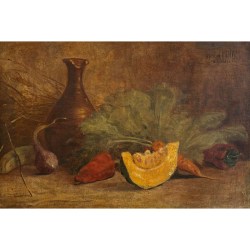
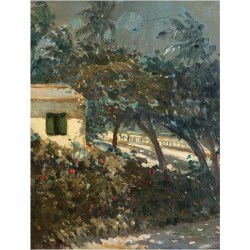
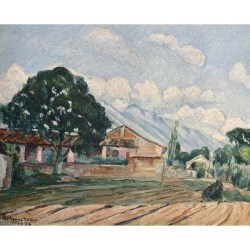
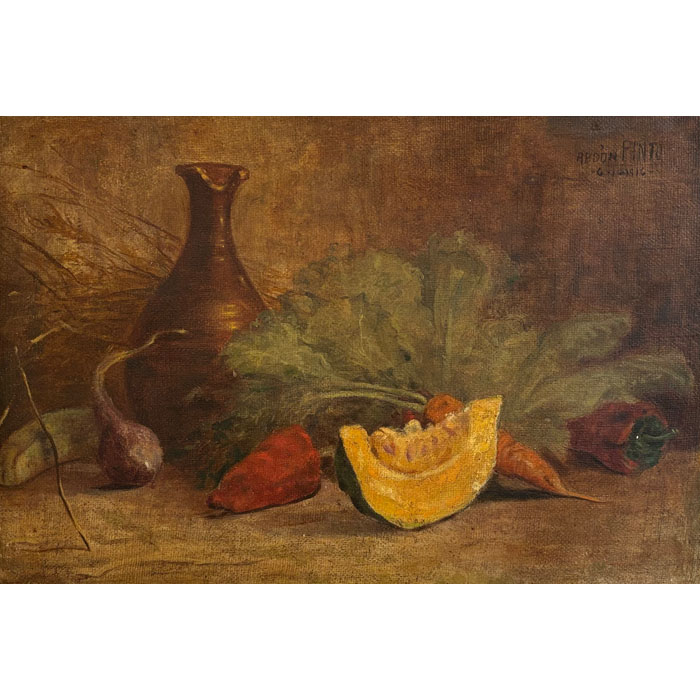
His artistic output, though brief, moved between academic tradition and the new landscape-oriented tendencies of the Círculo. He treated historical themes in his early work but also cultivated still life and landscape. Notable works include Calle (1916), Paisaje de Catia and Flores (both 1917, now in the collection of the Galería de Arte Nacional). The art historian Enrique Planchart praised him as one of Herrera Toro's most distinguished disciples, noting that Pinto's work is recognizable by "a certain lyrical accent that characterizes him".
Abdón Pinto died young in Caracas on November 6, 1918. Despite his short career, his work was included in major collective exhibitions at the Museo de Bellas Artes in Caracas, among them "Exposición de paisaje venezolano" (1942), "Tres siglos de pintura venezolana" (1948), "Paisaje de Caracas" (1952), and "Exposición pintura Venezuela" (1959). He is remembered as a transitional figure whose paintings bridged academic postulates and the innovative attitudes of the Círculo de Bellas Artes generation.
We have access to a wide range of art collections to meet your requirements, ranging from Venezuelan & Latin American to international masters.
Contact us at +1 305 907-9960 regarding the artist you’re looking for; we’ll search and find it for you.
When starting a collection one must consider a variety of factors. First however, one must start by asking – why and how will I start to collect art?